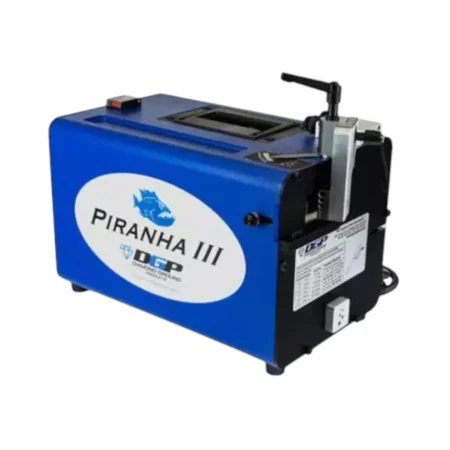
Technical Information: Grinding of Tungsten Electrodes
Importance of Longitudinal Grinding
Tungsten electrodes are manufactured with a grain structure that runs lengthwise. For this reason, grinding the electrode longitudinally – parallel to the grain – is essential for maintaining a stable and properly formed tip. Grinding across the grain creates lateral notches, which weaken the tip and negatively affect arc performance.
Because electrons travel at higher density along the surface of a conductor, the condition of the electrode surface directly influences arc behavior. When an electrode is ground or polished laterally, the electrical current tends to jump across the grinding marks. This causes the arc to start before the actual tip, resulting in a wide, unstable arc that wanders or flickers. The electrode also overheats more quickly, causing premature wear and faster loss of alloying elements such as thorium.
Grinding longitudinally produces a smooth, consistent path for electron flow. The arc forms precisely at the tip, remains narrow and bell‑shaped, and ignites cleanly in a straight line. This reduces thermal stress on the electrode and significantly extends its service life.
Tungsten Grinder Tip Geometry
Electrode tip angles typically range from 15° to 180°. The selected angle influences bead width, arc starting characteristics, current‑carrying capacity, arc stability, weld penetration, and electrode longevity.
Effects of Tip Angle
Sharper Tip (Narrow Angle):
- Produces a wider weld bead
- Allows easier arc starting
- Requires lower amperage
- Improves arc stability
- Reduces weld penetration
- Shortens electrode life
Blunter Tip (Wider Angle):
- Produces a narrower weld bead
- Requires more effort to strike the arc
- Supports higher amperage
- Increases potential for arc wander
- Improves weld penetration
- Extends electrode life
Tungsten Grinding Equipment
We supply tungsten electrode grinders suitable for a wide range of budgets and applications. Options include:
- Handheld tungsten grinders
- Bench‑ or desk‑mounted grinders
- Floor‑mounted grinding systems
Contact us to discuss your specific requirements and determine the most appropriate equipment for your welding environment.